

Driving jobs in Japan are gaining popularity among both locals and foreigners. For some, it’s the appeal of reliable pay and, for others, it's the flexible schedules.
This guide looks at driver jobs in Japan, focusing on entry requirements, visa options, and a bit about what daily work might actually look like for foreign drivers.



Anyone thinking about working here could find answers and, perhaps, set their expectations realistically.
Why Driving Jobs Are in Demand in Japan?
Japan's economy and lifestyle have a way of making certain jobs indispensable. Transportation is one of those sectors.
Demand isn’t just for truck drivers or delivery workers—private taxi drivers and ride-hailing providers are also needed, especially in densely populated or aging communities.
Growing Need for Logistics and Delivery Drivers
Online shopping has made logistics work more appealing and, honestly, more common than before.
Companies like Yamato and Sagawa, along with e-commerce giants such as Amazon Japan, tend to hire delivery drivers to meet order volume. There are also local courier services, each with its own criteria and pay setup.

Taxis and Chauffeur Services
Taxis in Japan remain an important resource, with cities such as Tokyo and Osaka leading in numbers and demand.
Many foreign residents consider this field since it sometimes has language flexibility, especially for drivers working with international tourists.
Private chauffeur services, especially for business clients, are a segment that occasionally welcomes new drivers with the right etiquette.
Ride-Hailing & App-Based Driving
Uber is not as widespread here as in some countries, but specialized ride-hailing apps exist. DiDi and JapanTaxi come to mind, offering work through flexible platforms.
However, requirements can differ, and it’s not always as open as one might expect, often depending on city regulations and partnership models.
Types of Driving Jobs Available in Japan
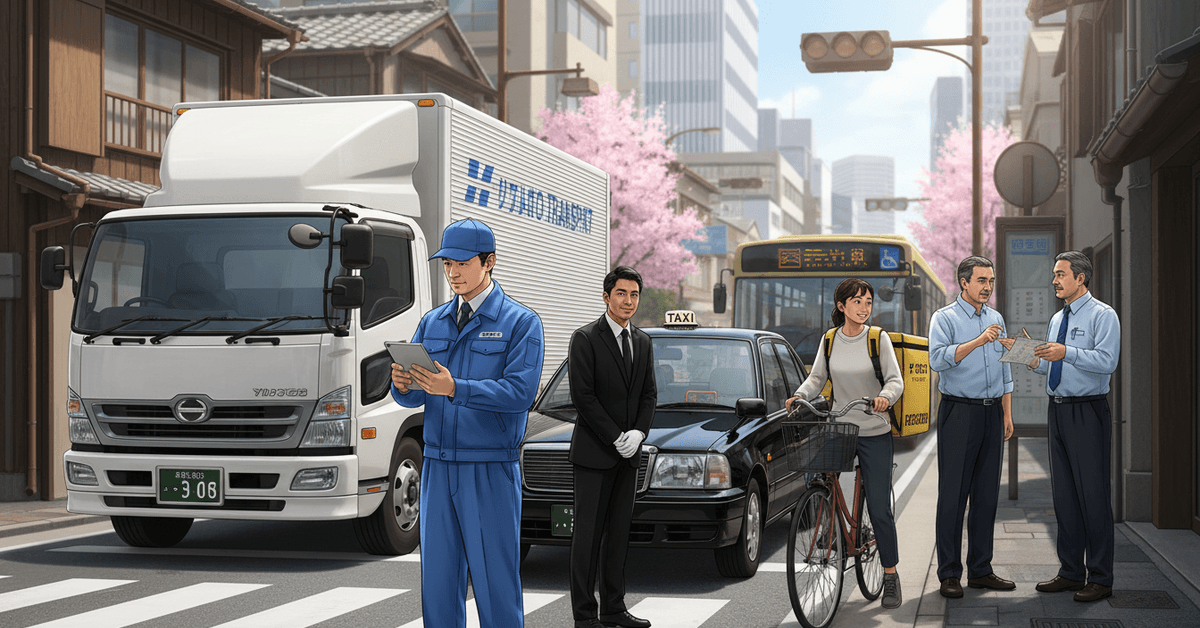
Diving into job types for drivers in Japan, options include:
- Taxi driver (personal or corporate)
- Truck driver (long-haul, regional, local)
- Parcel delivery driver
- Chauffeur/private car driver
- Bus/fleet driver
- Ride-hailing driver
Each has specific requirements, work patterns, and levels of competition. Taxi and delivery often top the list for new arrivals, but it’s possible to branch out over time. The level of Japanese required might vary—sometimes a bit frustratingly, for those not yet fluent.
Basic Driver Job Requirements in Japan
There are certain baseline qualifications for driving work, which can appear a bit strict, but, in reality, they’re generally about ensuring safety and professionalism.
Valid or Transferable Driver’s License
Japan does not accept all foreign driving permits. For short stays, an International Driving Permit (IDP) based on the 1949 Geneva Convention is okay, usually for up to a year. But for proper work, employers seek drivers with a Japanese license.
This means foreigners often have to convert their license or take the local driving test. Countries like the UK, South Korea, or Germany have relatively simple conversion processes, but others might need to pass written and practical tests—for some, a source of anxiety.
Minimum Age and Health Requirements
The standard minimum age for commercial vehicle drivers is 21. Employers also want confirmation of good health, especially for positions requiring night shifts or the handling of large vehicles. Medical checks are common, including eyesight and in some cases, hearing ability.
Background Checks and Screening
Reliable personal history is a must. Ordinarily, background and police checks are necessary—especially for taxi and freight drivers.
A clean driving record with minimal infractions is expected, even more so for applicants working with school buses or transporting high-value freight.
Language Skills: Is Japanese Essential?
This is perhaps the section that feels tricky. Most Japanese employers prefer drivers who can communicate in Japanese—at least for basic interaction.
Delivery work can sometimes allow basic proficiency, especially for roles focused on international customers.
Taxi and app-driven work may be more flexible, but expect a language test or an interview—sometimes both.
If the job involves paperwork, navigation systems, or direct contact with elderly or non-tech-savvy clients, Japanese fluency goes from ‘preferred’ to ‘required.’
Visa Requirements for Foreign Drivers
Foreign nationals generally need a valid visa status that allows working—in other words, a residency status that includes ‘permission to engage in activity other than that permitted under the status of residence previously granted.’
Specified Skilled Worker (SSW) and Work Visas
The Japanese government added the Specified Skilled Worker (Tokutei Ginou) visa category, which includes the transport and logistics sectors.
As of 2024, certain trucking and delivery jobs fall under ‘Type 1’ SSW, provided applicants pass a skills test and basic language exam.
Alternatively, some may qualify for the ‘Engineer/Specialist in Humanities/International Services’ visa if they can prove expertise in a specific domain—rare for driving jobs, but possible in combination roles.
Student, Spousal, or Dependent Visas
Foreigners on student or dependent visas may be able to work in driving-related jobs, but only up to the hourly limits prescribed by immigration law (often 28 hours a week, unless during designated school breaks).
Side jobs must be reported and permitted—driving roles may be scrutinized to confirm they’re not classified as unauthorized work.
Salaries & Earning Potential: 2024 Estimates
On average, driver salaries in Japan vary by city, employer, and type of role. Truck drivers, for example, report annual salaries from ¥2.4 million to ¥3.8 million (roughly $16,000–$25,000 USD at current exchange rates).
Taxi drivers might see monthly salaries of ¥200,000 to ¥350,000—sometimes higher with experience and good area knowledge.
- Delivery drivers: Typically start around ¥1,000–1,300/hour, with opportunities for overtime.
- Taxis/chauffeurs: Some positions are mostly commission-based, so earnings can shift month to month.
- Truck drivers: Higher pay is possible for long-haul or overnight shifts.
It’s not always straightforward: some months can feel lean, others surprisingly rewarding, especially with tips or bonuses.
How to Apply: Steps for Foreigners
Applying for driving jobs in Japan usually follows a particular pattern, with minor differences by company. Generally, candidates go through the following:
- Check eligibility and secure a work visa (if required).
- Gather official documents: resident card, proof of license transfer, and medical clearance.
- Apply through company websites, recruitment agencies, or sometimes at in-person job fairs.
- Attend interviews, tests (driving skill or language), and background checks.
- Upon offer, undergo orientation and sometimes further local licensing procedures.
Some job boards specializing in English-speaking or foreigner-friendly roles include GaijinPot Jobs and Daijob. Still, direct applications to major logistics and taxi companies may also be considered sensible.
Challenges and What to Expect on the Job
Day-to-day realities for non-Japanese drivers may include language barriers, adapting to local road rules (left-hand driving is standard), and sometimes, culture shock regarding etiquette or customer service.
Most newcomers pick up the rhythms within a few months, though, with support from bilingual supervisors or training videos.
Punctuality and careful driving are not just encouraged—they’re essential for job security. There is also a fair emphasis on personal appearance and uniform adherence, particularly for taxis and commercial fleet work.
Legal & Tax Considerations
Legal compliance in Japan is quite strict. All drivers must carry proper insurance, both vehicle and, where applicable, personal accident coverage.
Employers often provide this, but confirm before starting work. Foreign employees must also pay into the social insurance system and file annual taxes—this process can feel complex, yet most companies offer assistance or recommend a tax advisor.
Tips for Japan Driving Jobs
- Convert your license early.
- Check visa rules carefully.
- Improve basic Japanese skills.
- Prepare clean driving records.
- Confirm insurance coverage first.
Final Thoughts on Driving Jobs
Driving jobs in Japan can offer steady work, flexible schedules, and practical opportunities for both locals and foreign residents.
The requirements can be strict, especially around licenses, visas, health checks, and language ability. Applicants should prepare documents carefully and understand local road rules before applying.
With proper planning, driving work in Japan can become a realistic path into logistics, delivery, taxi, or chauffeur roles.