
Japan’s construction sector has been a major employer for decades, but recently, there’s been a noticeable rise in demand for foreign construction workers.
This shift raises important questions: What’s drawing overseas job seekers to Japan’s worksites? How might a foreigner actually secure a reliable position, and what benefits—or challenges—can they expect?


This guide unpacks those questions in a straightforward way. If you’re considering a move or just want to understand this industry, there’s a lot here that’s worth knowing.
Why Are Construction Jobs in Japan Attracting Foreigners?
The need for workers in Japan’s construction industry is genuine. Companies face workforce shortages—partly due to Japan’s aging society.
Economic projects keep surfacing, from big-city developments to rural infrastructure renewal. That combination has opened real opportunities for foreigners, though it’s not quite as simple as just hopping on a plane and picking up a hammer.
Major Construction Boom and Labor Demand
Major events like the Tokyo 2020 Olympics (held in 2021) accelerated growth, but even after that, cities and rural regions continue investing heavily in public works.
Residential and commercial development hasn’t slowed much either. It would be hard to ignore how much demand this creates for skilled and entry-level workers alike. That’s especially true in major cities but isn’t limited to just urban centers.
Government Policies to Attract Foreign Talent
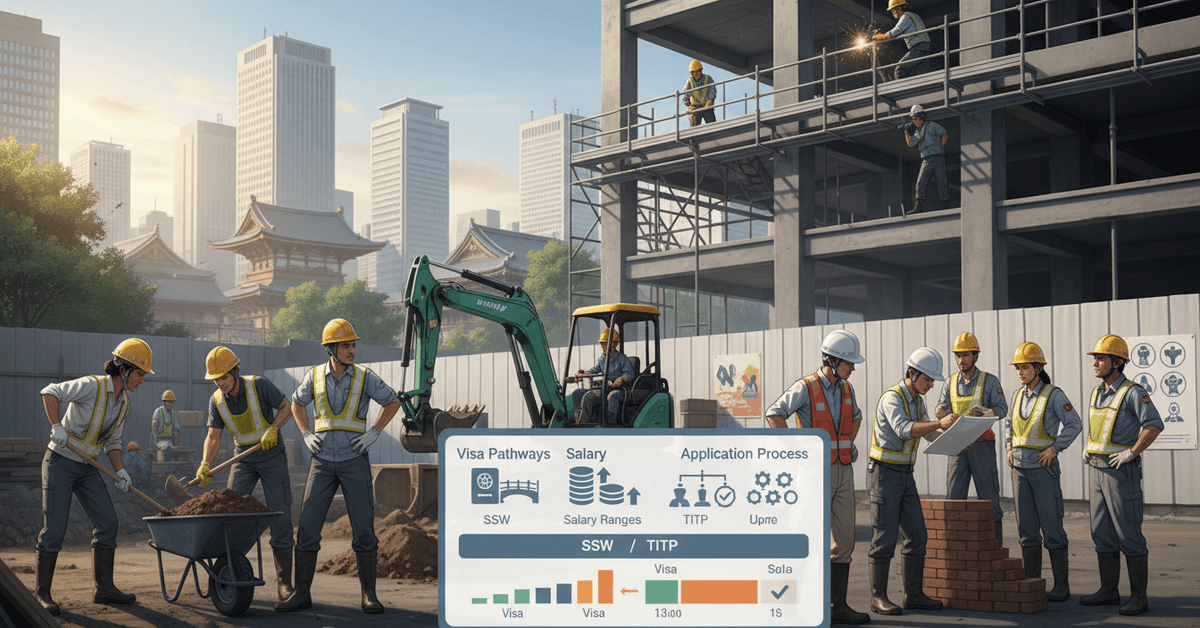
Japan has introduced new visa options for foreign labourers, such as the Specified Skilled Worker (SSW) visa.
While strict in some ways, these policies actively encourage non-Japanese workers to fill labor gaps. In practice, many construction firms now employ foreigners from Vietnam, the Philippines, Nepal, and beyond.
Competitive Pay and Reliable Work
One thing that often gets overlooked: Japanese construction jobs can offer relatively stable employment and fair wages.
Overtime, hazard bonuses, and paid holidays are commonly reported. But hourly rates do depend a lot on skill, location, and employer.
Common Roles and Responsibilities in Japanese Construction
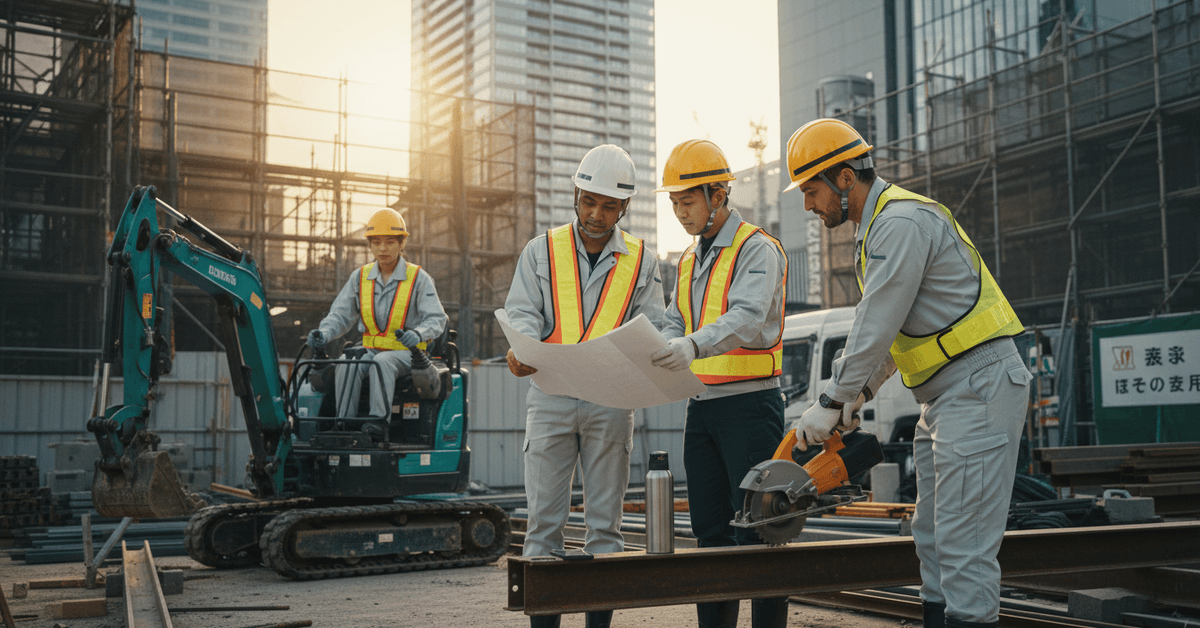
Foreign workers get jobs in many construction roles. Some require relevant experience, others focus more on physical stamina and reliability than specialized skills.
Typical Entry-Level Construction Jobs
For many newcomers, laborer roles are the main entry point. These might involve simple demolition, concrete work, or assisting skilled trades. Japanese isn’t always required for basic tasks, though understanding safety commands helps.
Skilled Positions Open to Foreigners
Foreigners with trade experience—carpenters, welders, heavy equipment operators—sometimes find higher-paying spots, given they meet licensing and language requirements. While not all positions are open to non-Japanese speakers, a surprising number are.
Site Safety and Teamwork
Japanese construction places high value on safety and efficient collaboration. Daily rituals—like group exercises or morning meetings—might feel unusual at first. Adaptability is useful; clear communication is even better, though not always easy in a different language.
How to Qualify for Construction Work in Japan
Rules are precise about who can work legally, so understanding the official process matters. Most foreign construction workers enter under government-approved visa categories.
Visa and Permit Types
- Specified Skilled Worker (SSW) visa: Designed for blue-collar sectors including construction. Requires a skills test and some Japanese language ability (N4 level is typical).
- Technical Intern Training Program (TITP): Aimed at skills transfer, this can lead to longer-term work for some candidates but also comes with stricter rules and more supervision.
Basic Requirements
- Usually, foreign applicants must be at least 18 years old.
- Passed skills and Japanese language exams, if applicable.
- Health checks and background screening (sometimes more intensive than expected).
Japanese Language Skills
It probably won’t surprise anyone: Knowing some Japanese is helpful, sometimes required. N4 proficiency on the JLPT (Japanese Language Proficiency Test) is a common benchmark, but real site survival might demand less (or more) in practice. Employers seem to care more about willingness to learn than perfection.
How to Find Construction Jobs in Japan
The process of job hunting looks different for foreigners. Several options exist, all with pros and cons.
Agencies and Recruiters
Many foreign construction workers discover opportunities through recruitment agencies, especially those specializing in international job placement. Agencies provide help with paperwork and can sometimes offer language support.
Online Job Boards and Company Websites
Some well-known job boards list construction jobs in Japan, from entry-level to skilled labor. Examples include GaijinPot Jobs and Daijob.
It might be worth checking directly with major construction firms; larger companies occasionally post openings aimed at non-Japanese applicants.
Word-of-Mouth and Social Networks
Surprisingly, networks of current expat workers play a big role. Social media groups and community pages often share opportunities, warnings, and firsthand experiences.
There’s an unpredictable quality to this, but occasionally these informal channels yield the best leads—or at least offer real insight into workplace culture.
Salaries and Benefits for Construction Workers in Japan
Compensation varies by many factors, but having a sense of averages and work conditions helps set realistic expectations.
Typical Pay Range
Entry-level construction jobs for foreigners typically start at 1,000–1,400 JPY per hour. Skilled workers may earn 1,500–2,200 JPY per hour or possibly more, depending on demand, region, and risk. Overtime is often available but might be capped for safety reasons.
Workplace Perks and Conditions
Some employers offer transportation, subsidized housing, safety gear, and paid leave. Health insurance and pension coverage are standard (shakai hoken).
It’s worth mentioning: while labor standards are generally strong, not every company follows best practices, so attentiveness is critical.
Potential Downsides and Realistic Challenges
It’s important to note that working in Japanese construction isn’t without its downsides. Long hours, physical demands, and cultural differences can be difficult at times.
Not every site is run the same or offers the same degree of fairness. There can be moments of miscommunication. Still, many workers find ways to adapt over time.
Legal and Tax Considerations for Foreign Construction Workers
Foreign construction workers in Japan must pay attention to legal status and tax obligations. Mistakes in this area can cause trouble.
Proper Work Authorization
Holding the right visa and keeping it valid is not just paperwork; it’s the foundation for lawful work. Unintentional overstays—even if minor—can result in big consequences.
Taxes and Social Insurance
Foreign workers pay income tax, with some deductions available through tax treaties. Enrolling in Japan’s mandatory insurance systems is usually non-negotiable.
At the end of employment, some workers can claim a partial pension refund, which sometimes gets overlooked.
Reporting and Documentation
Proper documentation—contracts, pay stubs, insurance enrollment—should always be kept safe. For questions, public services and non-profit support groups can help clarify rights and obligations.
Tips to Make the Most of a Construction Job in Japan
Success depends on more than just showing up each day. Practical habits and an open mindset make a difference.
- Learning even basic Japanese improves both safety and comfort on site.
- Keeping careful records (wages, overtime, contracts) guards against misunderstandings and fraud.
- Talking with coworkers, even with language mistakes, usually builds goodwill.
- Seeking help from expat groups or support centers can make transitions easier, especially for paperwork or legal concerns.
Final Thoughts on Construction Jobs
Construction jobs in Japan can offer stable income, practical experience, and real opportunities for foreign workers. The industry needs both entry-level laborers and skilled workers, but legal work status and safety awareness are essential.
Applicants should prepare documents, understand visa rules, and confirm employer conditions before accepting any role.
With patience, proper records, and basic Japanese skills, construction work can become a strong pathway into Japan’s labor market.