
Japan keeps showing up on job seeker forums as this mythical place where you can earn good money doing factory work without a degree. And for a specific kind of person, that reputation holds up.
I'm talking about the career-changer or the first-time foreign worker who wants predictable income, real benefits, and a path that does not depend on a diploma. If that sounds like you, the factory sector in Japan deserves more than a passing look.

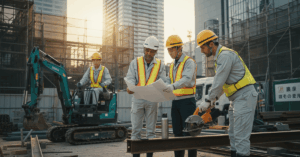

Pay ranges between ¥1,100 and ¥1,400 per hour at the entry level, and that number climbs fast once you factor in night shift premiums and overtime. Throw in subsidized housing from many employers, and your actual cost of living drops.
The 2026 setup is different from five years ago. Supply chain shifts, an aging workforce, and recovery across electronics and automotive are pushing demand for factory workers higher. This is a good time to pay attention.
Which Industries Are Actually Hiring in 2026
Not all factory work in Japan is the same, and the industry you land in will shape your schedule, your take-home pay, and your day-to-day.
Automotive: Best Pay, Hardest Shifts
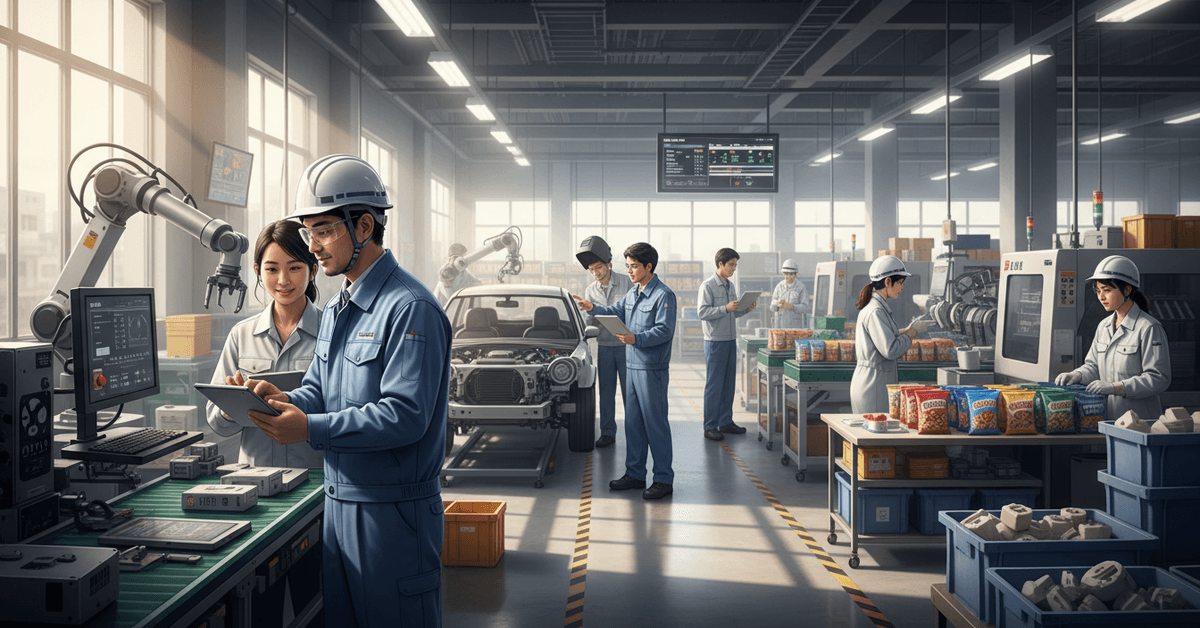
Car manufacturing is where the money tends to live. Roles in parts assembly, welding, painting, and inspection are steady openings at companies like Toyota.
Shifts run long and the pace is demanding, but the benefits package often includes some of the best workplace perks in the sector.
I think automotive is the right starting point for anyone prioritizing earnings, because the combination of base pay and overtime in this sector outpaces food processing by a margin that compounds fast over six months.
Electronics: Where Humans Still Beat the Machine
Japan's electronics factories pair workers with automated systems on fine assembly lines.
The work is precise rather than physically brutal, which makes it a reasonable choice if heavy lifting is a concern. Quality assurance and component testing roles come up regularly.
Food Processing: Underrated for Newcomers
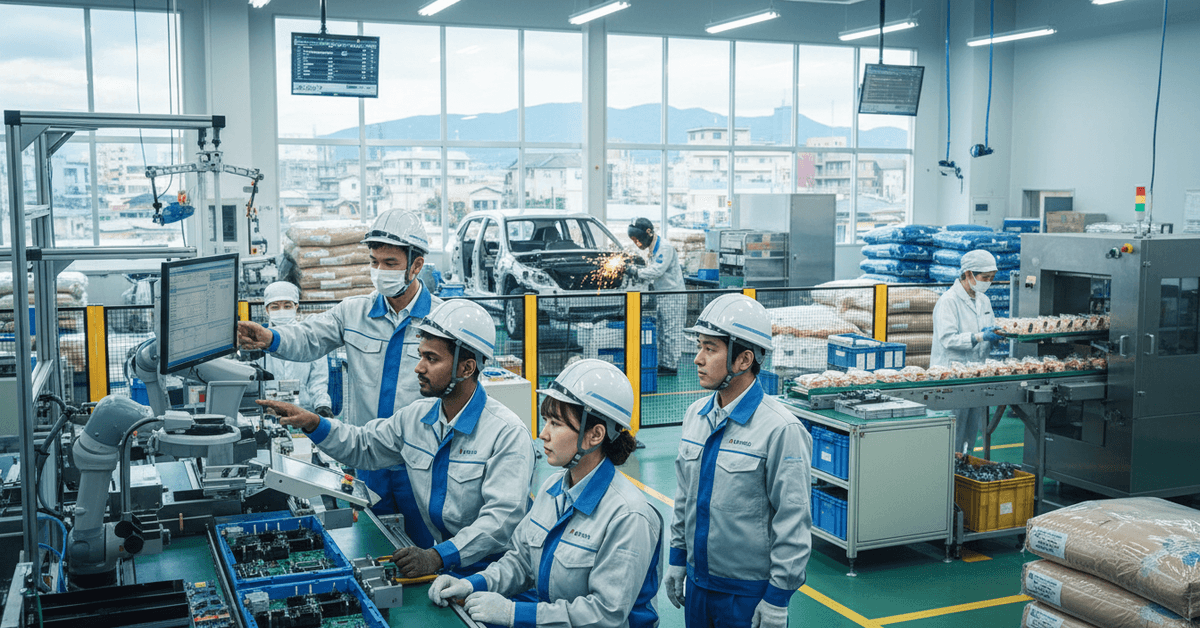
Food factories tend to be quieter and lighter on physical demands than auto or electronics.
Pay rates run slightly lower, but if you are new to Japan and want a lower-stress entry point while you learn the language and the system, this track makes sense.
Plastics and Metals: The Overlooked Growth Sector
Japan is investing in recyclable materials and updated production lines, and hiring in plastics and metals manufacturing is expected to keep rising through 2026. Shift workers who can adapt to rotating product lines have an edge here.
What You Actually Need to Get Hired
This is where a lot of articles oversell the difficulty. Factory work in Japan does not require a university degree. It does require a few practical things.
- A valid visa. The Specified Skilled Worker (SSW) visa and the Technical Intern Training visa are the two main routes for foreign applicants. Employers frequently help with paperwork, but having your documents organized before you reach out saves time and signals that you are serious.
- Basic Japanese comprehension. You do not need fluency. Enough to follow safety instructions keeps you employable and safe. Some employers run language support programs, and a short course before you arrive will get noticed during hiring.
- Physical readiness. Standing, lifting, and repetitive motion are part of the job. Modern factories use ergonomic workstations and safety equipment as standard, so this is less brutal than it sounds. Most people adapt within a few weeks.
A high school diploma helps for some roles, but entry-level positions do not always require one. Prior factory experience is a plus, not a gate.
How to Find Legitimate Job Postings
The search can feel scattered. Combining a few channels gives you a wider net.
- GaijinPot Jobs and Indeed Japan both post factory roles regularly. Search in Japanese as well as English to see listings that do not get translated.
- HelloWork and NIPPON SHIGOTO are staffing agencies that handle paperwork and explain contract details, which is useful if Japan's employment norms are new to you.
- Direct applications to large manufacturers like Toyota or Panasonic often work well during their annual hiring rounds. Smaller firms take applications year-round.
- Factory job fairs, some of which run online, let you ask employers questions directly before applying.
Word of mouth still works. Online forums and expat social groups sometimes surface job leads that never make it to official boards.
The Contrarian Take: Skip the Language Course Obsession
Every guide tells you to master Japanese before you apply. I disagree with that advice, at least as a prerequisite.
A basic working level of Japanese, enough to read safety signs and follow verbal instructions, gets you hired at companies with international recruitment programs.
Spending months on intensive language study before applying costs you earnings you could be collecting while learning on the job.
Companies that recruit foreign workers often provide language support or lessons. Use their program, not a pre-departure course that delays your start date by six months.
Contracts, Taxes, and What Stays in Your Pocket
Japan's labor protections are tighter than many workers expect. The Labor Standards Act sets minimums on working hours, rest periods, and safety. Labor unions operate in many large factories and add another layer of protection if disputes come up.
Fixed-term versus indefinite contracts are the two most common arrangements. Read the fine print on renewal procedures and notice periods before signing. Pay particular attention to the overtime clause.
Social insurance and pension contributions are deducted automatically from your paycheck. Income tax is also withheld at source.
Your take-home pay will be lower than the hourly rate suggests on paper, but the structure means you are building pension credit from day one.
| Industry | Approx. Hourly Pay | Housing Benefit | Physical Demand |
|---|---|---|---|
| Automotive | ¥1,300-¥1,400+ | Common | High |
| Electronics | ¥1,150-¥1,350 | Sometimes | Medium |
| Food Processing | ¥1,100-¥1,250 | Occasional | Low-Medium |
| Plastics/Metals | ¥1,100-¥1,300 | Varies | Medium |
Automotive pays the most and demands the most. Food processing is the softest landing if you are new.
Living on a Factory Worker's Budget in Japan
Dormitory housing provided by employers is one of the most underused tools for building savings fast.
Cities like Nagoya and Hiroshima offer a better balance between factory wages and cost of living than Tokyo or Osaka, where rent will eat a larger share of what you earn.
The social adjustment takes longer than the work adjustment. Many newcomers feel isolated in the first month.
Co-workers and company-organized events help, and expat communities in manufacturing cities are more active than people expect. Once that network forms, daily life gets easier.
For a solid overview of the visa options that match each contract type, Japan's Ministry of Foreign Affairs keeps the most current eligibility details updated.
Questions People Ask About Factory Worker Jobs in Japan
Q: Can I get a factory job in Japan without speaking Japanese? Many companies with international recruitment programs hire workers at a basic Japanese level. Enough to follow safety instructions is the practical floor. Some employers offer language classes as part of the job package.
Q: What is the Specified Skilled Worker visa and how does it apply to factory work? The SSW visa is a work visa designed for specific industries including manufacturing. It requires passing a skills test and a Japanese language test, though the language test can be waived in some cases. Employers who recruit internationally often guide applicants through the process.
Q: Is overtime mandatory in Japanese factories? Overtime is common and sometimes expected, but mandatory unlimited overtime is regulated under the Labor Standards Act. Overtime pay rates are higher than standard rates, so many workers take it voluntarily to increase monthly earnings.
Q: Are dormitory arrangements worth it or should I find my own place? For the first six to twelve months, dormitory housing cuts living costs significantly and puts savings within reach faster. Private apartments offer more freedom but eat into your monthly surplus, especially in larger cities.
Q: What happens to my pension contributions if I leave Japan? Japan has a lump-sum withdrawal system for foreign nationals. If you leave Japan after paying into the pension system, you can apply to recover a portion of your contributions within two years of departure.
Conclusion
Factory worker jobs in Japan offer stable pay and real benefits for people willing to do the work.
The 2026 hiring climate in automotive, electronics, and plastics favors applicants who show up prepared with documents and basic language skills. Cities like Nagoya and Hiroshima give your earnings more room to breathe than the major metros.
If a predictable income and a clear path forward matter more to you than prestige, Japan's factory sector is worth a serious look.