

Plenty of foreigners land in Japan and immediately start wondering how to make money without a full-time contract. Delivery driver jobs keep coming up, and for good reason. They're flexible, accessible, and pay per delivery.
But I'd push back hard on how most guides frame this work: as a last resort for people who can't get "real" jobs. That framing is wrong, and it's costing people money.



The gig delivery market in Japan was already growing fast before 2020. Online ordering since then has pushed demand to a different level entirely.
Companies like Uber Eats, Wolt, and Demae-can are actively adding drivers in Tokyo, Osaka, and Fukuoka right now in 2026.
The rider you see weaving through Shibuya at noon isn't necessarily broke or desperate. Some are deliberately picking this over office work.
Who Is This Work For?
The reader I'm writing for isn't a backpacker who just arrived with ¥50,000 and no plan.
This is for someone already in Japan, maybe on a Working Holiday or Student visa, who needs income that fits around language classes, travel, or other part-time commitments.
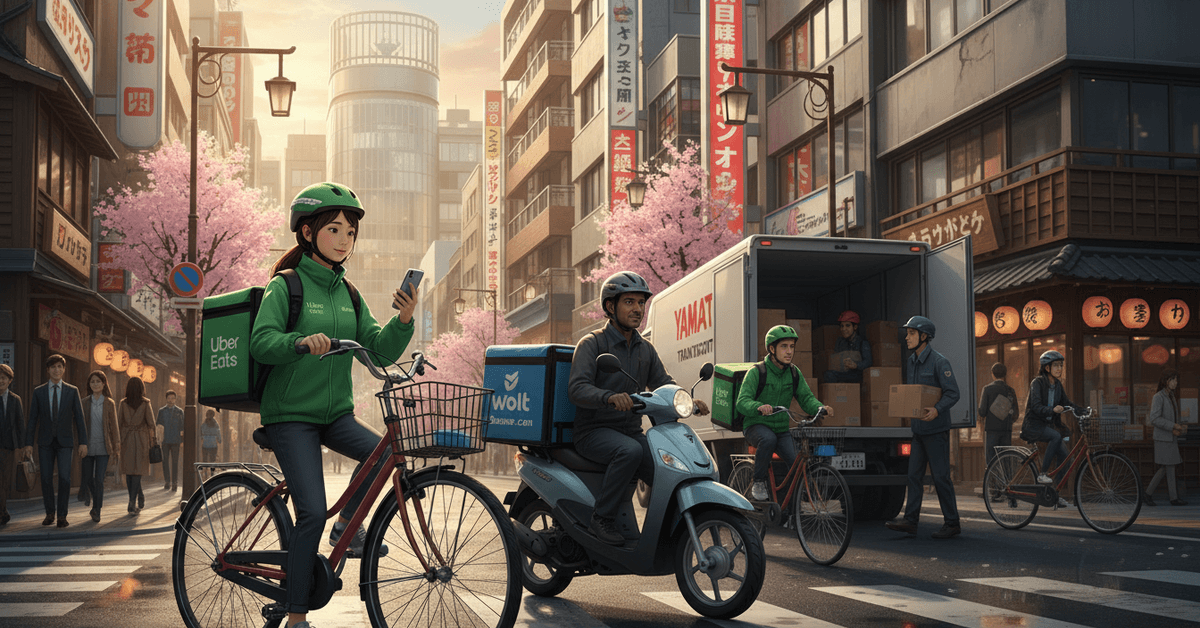
That person gets ignored in most job guides, which either assume you're fluent in Japanese or assume you're applying for a formal company position. Delivery work sits in between those two categories.
The Visa Question Nobody Clarifies Upfront
Working Holiday visa holders can work delivery jobs without a cap on the type of work, though the total stay is limited.
Student visa holders can work up to 28 hours per week, and delivery platforms count toward that limit. Specified Skilled Worker visa holders generally have no restriction on part-time work of this kind.
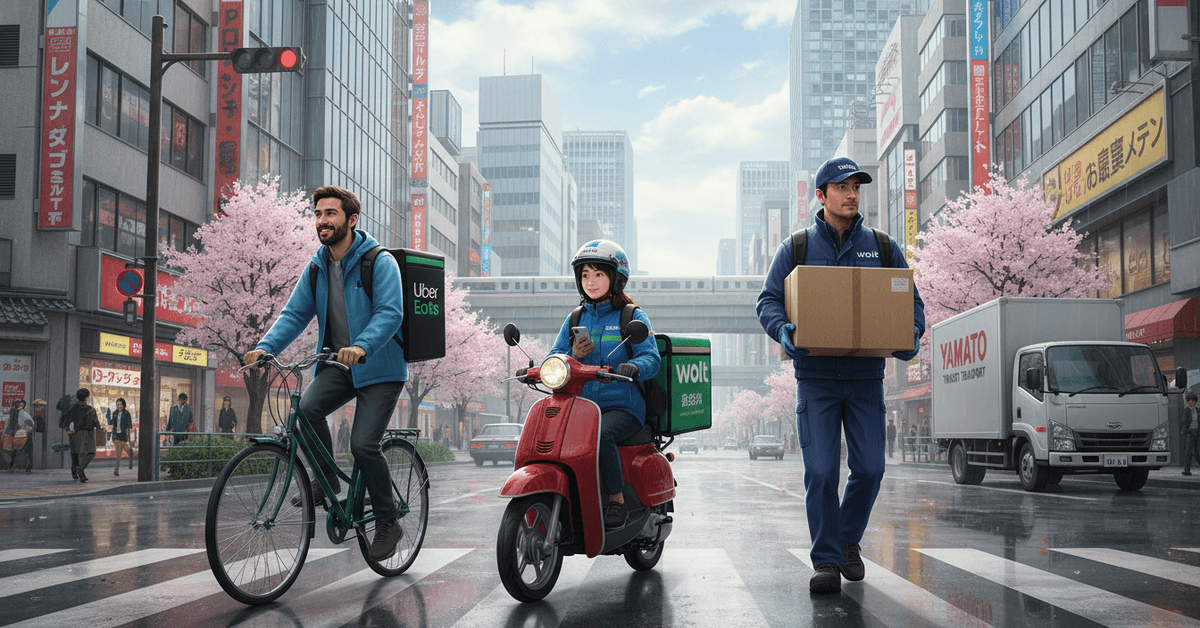
The issue is that platforms don't always spell this out on their registration pages.
Some onboarding flows for Uber Eats Japan and Wolt ask for residency card scans but won't tell you if your specific visa class qualifies. The safest move: cross-reference with the Immigration Services Agency of Japan directly before registering, not after.
I'd skip any guide that tells you "foreigners can work delivery jobs in Japan" without specifying which visa categories actually apply. That vague reassurance has tripped people up.
The Four Main Types of Delivery Work in Japan
The food courier on a bicycle is the most visible type, but that's a fraction of what's available.
- Food and grocery delivery covers Uber Eats, Wolt, and Demae-can. Drivers use bikes, scooters, or cars. Payment is per completed order, with bonuses during peak hours like lunch and dinner rushes.
- Parcel and e-commerce delivery covers companies like Yamato Transport and Sagawa Express. These roles are more structured, sometimes full-time, and usually require stronger Japanese since you're dealing with recipient confirmations and address issues all day.
- Specialty and local courier work covers medical supply runs, gift deliveries, and local business logistics. These are harder to find but worth watching for on job boards like Indeed Japan or HelloWork.
- App-based same-day delivery is a growing category. Platforms have expanded beyond food into retail items, pharmacy orders, and convenience store runs. The order types are more varied, which keeps the work less repetitive.
Comparing the Big Three Platforms
| Platform | Language Requirement | Vehicle | Pay Structure |
|---|---|---|---|
| Uber Eats Japan | Minimal Japanese needed | Bike, scooter, or car | Per delivery + peak bonuses |
| Wolt | App available in multiple languages | Bike or scooter | Per delivery + support from Wolt |
| Demae-can | Japanese helpful; some English onboarding | Bike, scooter, or car | Per delivery; traditional and app-based roles |
Wolt has the easiest onboarding experience for non-Japanese speakers in 2026.
The app runs in multiple languages and their courier support responds faster than the other two in my observation. That said, Uber Eats Japan still has the widest geographic coverage across Japanese cities.
What You'll Actually Earn (And What It'll Cost You)
Peak-hour rates run between ¥1,000 and ¥2,500 per hour depending on city, platform, and demand timing. Tokyo during lunch and dinner rushes sits at the higher end of that range. Smaller cities drop closer to the lower end.
The part guides consistently gloss over: your costs come straight out of those earnings.
Bike maintenance, scooter fuel, phone data for GPS and the delivery app, and rain gear all add up. Bicycle couriers in Tokyo spending ¥5,000 to ¥8,000 per month on maintenance and gear isn't unusual. That's a real reduction from your gross.
Self-employment tax is the bigger surprise for foreigners. Delivery platform work in Japan is classified as contracting, not employment.
That means no automatic tax withholding. If you earn above a certain threshold, you'll need to file a tax return yourself through the National Tax Agency Japan. Most people don't find this out until they've already earned several months of income.
What the App Won't Tell You About Peak Hours
I was skeptical that timing shifts could change earnings by more than 10%, but the difference between a 11am-2pm lunch shift versus a 3pm-5pm dead zone is stark on Uber Eats.
High-density residential areas near train stations and university campuses generate orders more consistently than central business districts on weekday afternoons. Learning those patterns takes about two to three weeks of riding.
Getting Started: The Actual Steps
The registration process for app-based delivery in Japan takes between 30 minutes and a few days depending on document verification speed.
- Prepare your residency card and visa documentation before starting any application
- Get a Japanese bank account or PayPay account for payment deposits; some platforms support both
- Verify your driver's license: Japanese license or International Driving Permit for scooter and car work; no license required for bicycle delivery
- Download the courier app, register, and complete the identity verification process (usually includes a selfie check)
- Wait for approval, which varies by platform; Wolt tends to approve within 48 hours, Uber Eats Japan can take up to a week
Physical Demands Worth Knowing
This is outdoor work in all weather. Tokyo summers hit 35°C+, and winters in Hokkaido or northern Honshu require serious gear.
Rain is the most underestimated factor. Riders who don't invest in waterproof bag covers and rain pants lose orders to weather faster than they expect.
The physical demand on a bicycle versus a scooter is genuinely different. If you're new to cycling long distances, factor that in before choosing platform and vehicle type.
My Contrarian Take on "Learning Japanese First"
The most common advice for foreigners entering Japan's job market is: learn Japanese first, then apply. For most work, I'd agree. For app-based food delivery, I think that advice is actively counterproductive for some people.
Wolt's app runs in multiple languages. Uber Eats Japan's courier interface is mostly visual. The customer interactions for food delivery are brief, often contactless, and rarely require more than a few stock phrases.
Starting delivery work with N5-level Japanese is workable, and earning income while practicing Japanese in real daily situations beats studying in isolation before applying anywhere.
The caveat: parcel delivery and logistics company roles like Yamato Transport and Sagawa Express genuinely require functional Japanese. Those aren't the same category.
Questions People Ask About Delivery Driver Jobs in Japan
Q: Can I do delivery work in Japan on a tourist visa? A tourist visa does not permit paid work of any kind in Japan. Platforms will ask for a valid work-eligible residency card during registration, and working on a tourist visa carries serious legal consequences including deportation.
Q: Do I need to own a bicycle or scooter to start? Some platforms allow rental bikes and scooters, and a few logistics companies maintain their own vehicle fleets. App-based platforms like Uber Eats Japan primarily expect couriers to supply their own vehicle, though rental options exist in some cities.
Q: How do taxes work for delivery drivers in Japan? Delivery work is classified as self-employment income. If your annual income from contracting exceeds ¥200,000 (when combined with other income sources), you need to file a final tax return by March 15 of the following year. Keep records of every expense.
Q: Is Japanese required for food delivery apps? For app-based food delivery on Wolt or Uber Eats, minimal Japanese is manageable. Reading delivery addresses helps, and knowing a handful of handover phrases covers most customer interactions. Yamato Transport and Sagawa parcel roles are a different story.
Q: Can I work multiple delivery platforms at the same time? Most platforms in Japan allow multi-apping, meaning you can register on Uber Eats and Wolt simultaneously and accept orders from both. There are no formal exclusivity agreements for individual couriers, but managing two apps during peak hours takes practice.
Conclusion
Delivery driver jobs in Japan offer one of the more practical entry points into earning income without a formal employer.
The earnings range is real, the flexibility is real, and the tax and visa requirements are manageable if you research them before you start. App-based platforms like Wolt have made registration accessible for non-Japanese speakers in 2026.
The work rewards people who learn the high-demand zones and treat the hours strategically.